

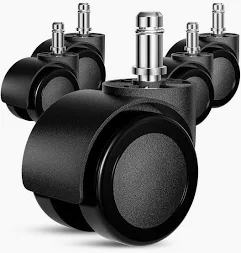
Heavy Duty Caster Wheels: How Much Weight Can They Support?
Heavy Duty Caster Wheels: How Much Weight Can They Support?
Direct Answer
Heavy duty caster wheels can support substantially more weight than standard furniture casters, but their exact capacity depends on the wheel design, material, size, mounting system, and manufacturer rating. Choose casters based on the total loaded weight and the conditions in which the equipment will move.

https://jobelservices.co.ke/how-to-choose-office-chair-caster-wheels/
Complete Guide to Heavy Duty Caster Wheels
Moving heavy furniture and equipment can be difficult when they do not have suitable wheels.
Heavy duty caster wheels provide a practical solution by allowing heavy items to move while maintaining adequate support.
They are commonly used on:
- Workshop cabinets.
- Tool storage.
- Heavy tables.
- Industrial equipment.
- Trolleys.
- Storage units.
- Commercial furniture.
- Mobile workbenches.
The correct caster depends on the load, floor surface, movement frequency, and mounting configuration.

https://primepathsolutions.co.ke/shop/
What Are Heavy Duty Caster Wheels?
Heavy duty caster wheels are reinforced wheels designed to support heavier loads than ordinary furniture casters.
They can feature:
- Stronger wheel materials.
- Reinforced brackets.
- Larger bearings.
- Higher load ratings.
- Swivel mechanisms.
- Braking systems.
Different models are designed for different applications.
How Much Weight Can Heavy Duty Caster Wheels Support?
There is no universal weight capacity for heavy duty caster wheels.
Capacity varies according to the specific model.
Important factors include:
- Wheel diameter.
- Wheel width.
- Wheel material.
- Bearing design.
- Mounting system.
- Number of casters.
- Load distribution.
- Floor condition.
For example, if equipment weighs 300 kg when fully loaded and uses four casters, you should not automatically select casters rated at exactly 75 kg each.
Movement can shift the load between wheels.
Choose a suitable safety margin based on the manufacturer’s specifications.
Types of Heavy Duty Caster Wheels
Heavy Duty Swivel Casters
Swivel casters rotate around the mounting point.
This makes heavy equipment easier to steer.
They are useful for:
- Trolleys.
- Mobile workbenches.
- Storage equipment.
- Commercial furniture.
Heavy Duty Fixed Casters
Fixed casters move in a straight direction.
They are useful when controlled, predictable movement is required.
Heavy Duty Locking Casters
Locking casters include brakes that help keep equipment stationary.
They are useful when equipment needs to move occasionally but remain stable during use.
Heavy Duty Rubber Casters
Rubber wheels can provide good grip and quieter movement on suitable surfaces.
Heavy Duty Nylon Casters
Nylon wheels can provide durability and resistance to certain working conditions.
Heavy Duty Polyurethane Casters
Polyurethane wheels can provide a balance of durability, load support, smooth movement, and floor compatibility for suitable applications.
How Do You Choose Heavy Duty Caster Wheels?
1. Calculate the Total Load
Consider:
- Equipment weight.
- Stored materials.
- Tools.
- Additional loads.
Choose casters based on the maximum expected load.
2. Check the Floor
Consider whether the wheels will move over:
- Concrete.
- Tiles.
- Wood.
- Vinyl.
- Carpet.
- Uneven surfaces.
The wheel material should match the environment.
3. Choose the Wheel Diameter
Larger wheels can generally move more easily over small floor irregularities.
Smaller wheels can work where mounting space is limited.
4. Choose Swivel or Fixed
Swivel casters provide easier directional movement.
Fixed casters provide straight-line movement.
Many mobile units use a combination of both.
5. Decide Whether You Need Brakes
Locking casters are useful when equipment must remain stationary after positioning.
6. Check the Mounting System
Common mounting methods include:
- Top plate.
- Threaded stem.
- Bolt hole.
- Other specialised fittings.
The mounting system must match the equipment.
Heavy Duty Caster Wheels for Workshops
Workshops often contain heavy equipment and storage systems.
Heavy duty casters can make:
- Tool cabinets.
- Workbenches.
- Storage carts.
- Equipment stands
easier to reposition.
Choose wheels according to the expected load and workshop floor.
Heavy Duty Caster Wheels for Tool Cabinets
Tool cabinets can become extremely heavy when fully loaded.
Before selecting casters, calculate the maximum loaded weight.
Also consider how frequently the cabinet will move.
For regularly moved tool storage, choose casters designed for repeated movement under the expected load.
Caster Wheels for Trolleys
Trolleys require both mobility and stability.
Swivel casters can improve manoeuvrability, while fixed casters can provide directional stability.
Locking casters can help keep the trolley stationary during loading or use.
Heavy Duty Caster Wheels for Furniture
Large furniture pieces may require stronger wheels when they need to remain mobile.
Examples include:
- Large storage cabinets.
- Commercial tables.
- Workstations.
- Display units.
- Mobile shelving.
Check the furniture base before selecting the mounting system.
How Do You Measure Heavy Duty Caster Wheels?
Before replacing an existing caster, record the following measurements.
Wheel Diameter
Measure across the wheel from edge to edge.
Wheel Width
Measure the wheel’s total width.
Overall Height
Measure from the mounting point to the floor.
Mounting Plate
For plate-mounted casters, measure:
- Plate length.
- Plate width.
- Mounting hole spacing.
Stem
For stem-mounted casters, measure:
- Stem diameter.
- Stem length.
- Stem configuration.
How to Install Caster Wheels
A typical installation involves:
- Remove the existing caster.
- Inspect the mounting area.
- Measure the existing hardware.
- Confirm the replacement caster specifications.
- Position the caster correctly.
- Secure the mounting hardware.
- Check that the caster is firmly attached.
- Repeat for the remaining casters.
- Test the equipment without its maximum load.
- Gradually introduce the expected load.
Make sure all mounting points are secure before regular use.
Common Heavy Duty Caster Problems
Caster Does Not Swivel Properly
Possible causes include:
- Dirt.
- Damaged bearings.
- Excessive load.
- Damaged swivel mechanism.
Wheel Does Not Roll Smoothly
Inspect the wheel, bearings, axle, and floor surface.
Caster Becomes Loose
Check the mounting hardware and equipment base.
Equipment Is Difficult to Move
Possible causes include:
- Incorrect wheel size.
- Excessive load.
- Unsuitable wheel material.
- Damaged casters.
- Uneven flooring.
Brake Does Not Hold
Inspect the brake mechanism and confirm that the caster is correctly installed.
Heavy Duty Caster Wheels vs Standard Caster Wheels
| Feature | Heavy Duty Casters | Standard Casters |
|---|---|---|
| Load Capacity | Higher | Lower |
| Construction | Reinforced | Standard |
| Heavy Equipment | Suitable | Limited |
| Workshop Use | Excellent | Application dependent |
| Cost | Usually higher | Usually lower |
| Frequent Heavy Loads | Suitable | Less suitable |
When Should You Replace Heavy Duty Caster Wheels?
Replace casters when:
- Wheels are cracked.
- Bearings are damaged.
- Swivel movement becomes difficult.
- Brakes stop working.
- Mounting components become damaged.
- Wheels develop excessive wobble.
- The existing load capacity is no longer sufficient.
Common Installation Mistakes
Avoid:
- Choosing casters based only on appearance.
- Exceeding the load rating.
- Using the wrong mounting system.
- Installing casters of different heights.
- Ignoring the floor surface.
- Using unsuitable screws or bolts.
- Failing to secure the mounting plate.
- Testing immediately with the maximum load.
How to Maintain Caster Wheels
- Keep wheels clean.
- Remove debris from the axle.
- Inspect bearings.
- Check mounting hardware.
- Check brakes.
- Inspect wheels for cracks.
- Avoid exceeding the rated capacity.
- Replace damaged casters.
Why Buy Caster Wheels from Jobel Hardware?
Jobel Hardware supplies furniture hardware and caster wheels for residential, commercial, workshop, and industrial applications across Kenya.
Heavy duty caster wheels can be used for:
- Tool cabinets.
- Workshop workbenches.
- Storage equipment.
- Trolleys.
- Commercial furniture.
- Heavy tables.
- Mobile equipment.
Before purchasing, confirm the load capacity, wheel diameter, wheel material, mounting type, floor surface, and brake requirements.
Frequently Asked Questions
How much weight can heavy duty caster wheels hold?
The capacity depends on the specific caster model. Check the manufacturer’s rated load capacity before installation.
Are heavy duty caster wheels suitable for furniture?
Yes. They can be used on suitable furniture such as heavy tables, cabinets, workbenches, and storage units.
Are swivel or fixed casters better?
Swivel casters provide better manoeuvrability. Fixed casters provide more predictable straight-line movement. The best option depends on the equipment design.
Do caster wheels need brakes?
Not always. Brakes are useful when equipment needs to remain stationary after being moved.
What size caster should I buy?
Choose based on load capacity, available mounting space, required wheel height, floor type, and movement requirements.
Can caster wheels damage floors?
Some wheel materials can mark or damage certain floors. Select a material suitable for the intended surface.
Conclusion
Caster wheels make heavy furniture, equipment, cabinets, trolleys, and workbenches easier to move. The correct caster depends on load capacity, wheel size, material, mounting system, floor type, and brake requirements.
Do not select casters based only on the number of wheels. Calculate the maximum loaded weight and compare it with the manufacturer’s rating.
Jobel Hardware supplies caster wheels and furniture hardware for residential, commercial, workshop, and industrial applications across Kenya.
