

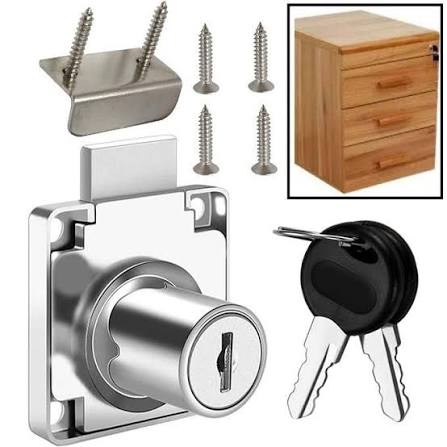
Drawer Locks: How Do You Choose the Right Lock for a Drawer?
Drawer Locks: How Do You Choose the Right Lock for a Drawer?
Direct Answer About drawer locks
The right drawer locks depends on the drawer material, front panel thickness, lock hole size, available installation space, locking mechanism, and level of security required. Cam locks are commonly used for office desks, cabinets, filing systems, cupboards, and furniture drawers.

https://jobelservices.co.ke/shop/
Complete Guide to Drawer Locks
Drawers are often used to store documents, stationery, tools, personal belongings, and other items.
A drawer lock can restrict access and provide additional control over stored items.
Choosing the correct lock requires more than checking its appearance.
You should confirm the lock dimensions and ensure that the mechanism matches the drawer.
Jobel Hardware supplies drawer locks and furniture hardware for homes, offices, schools, shops, workshops, and commercial furniture projects across Kenya.

https://primepathsolutions.co.ke/
What Is a Drawer Lock?
A drawer lock is a compact locking mechanism designed to secure a drawer.
The lock is usually installed through the drawer front.
When the key is turned, an internal locking component moves into position and prevents the drawer from opening.
Drawer locks are commonly found on:
- Office desks.
- Filing cabinets.
- Storage cabinets.
- Wooden drawers.
- Metal drawers.
- Lockable furniture.
- Commercial storage units.
What Types of Drawer Locks Are Available?
Cam Drawer Locks
Cam locks use a rotating metal cam to secure the drawer.
They are compact and widely used in furniture.
Cylinder Drawer Locks
Cylinder locks use a key-operated cylinder mechanism.
They can be used where a traditional keyed locking system is required.
Central Locking Systems
Some furniture uses a central locking mechanism that controls multiple drawers with one key.
These systems are common in certain office desks and filing cabinets.
Push Locks
Push locks can secure a drawer using a push-operated mechanism.
The exact operation depends on the lock design.
How Does a Drawer Lock Work?
A typical cam drawer lock works through a rotating cam.
When the drawer is unlocked, the cam moves away from the cabinet frame.
When you turn the key to the locked position, the cam rotates behind the cabinet structure.
This prevents the drawer from being pulled open.
How Do You Choose the Right Drawer Lock?
1. Measure the Drawer Front
Check the thickness of the drawer front.
The lock barrel needs to fit through the panel correctly.
2. Check the Existing Hole
If you are replacing an existing lock, measure the diameter of the installation hole.
3. Measure the Lock Barrel
Check the length of the lock body.
A barrel that is too long or too short may not fit correctly.
4. Check the Cam
The cam must reach and engage the correct part of the cabinet.
Check:
- Cam length.
- Cam width.
- Cam shape.
- Cam orientation.
5. Consider the Drawer Material
Wooden and metal drawers can require different installation approaches.
6. Consider Your Security Requirements
Choose a lock appropriate for the value and sensitivity of the items being stored.
How Do You Measure a Drawer Lock?
Before purchasing a replacement, record these measurements:
Panel Thickness
Measure the drawer front from front to back.
Hole Diameter
Measure the diameter of the existing lock hole.
Lock Body Length
Measure the portion of the lock that passes through the drawer.
Cam Length
Measure the distance from the cam’s mounting point to its locking end.
Cam Position
Check where the cam sits when the lock is locked and unlocked.
These measurements help you identify a compatible replacement.
How to Install a Drawer Lock
A typical installation process involves:
- Empty the drawer.
- Remove the existing lock.
- Inspect the installation hole.
- Measure the drawer front.
- Confirm the replacement lock dimensions.
- Insert the new lock.
- Secure the lock body.
- Install the cam.
- Align the cam with the cabinet.
- Test the key.
- Lock and unlock the drawer several times.
The locking cam should engage cleanly without forcing the drawer.
Common Drawer Lock Problems
Drawer Lock Will Not Turn
Possible causes include:
- Wrong key.
- Damaged cylinder.
- Misaligned cam.
- Internal mechanism failure.
Key Turns but Drawer Does Not Lock
The cam may not be engaging with the cabinet.
Check its orientation and position.
Drawer Lock Is Loose
The retaining nut or mounting hardware may need adjustment.
Drawer Will Not Close
The cam may be incorrectly positioned or interfering with the cabinet.
Key Is Difficult to Remove
Check the lock position and alignment.
Do not force the key.
When Should You Replace a Drawer Lock?
Replace a drawer lock when:
- The key no longer operates correctly.
- The cylinder is damaged.
- The cam is bent.
- The lock becomes loose.
- The mechanism fails.
- The lock is no longer suitable for the drawer.
- You need to upgrade the existing locking system.
Drawer Locks for Office Desks
Office desks often contain drawers for documents, stationery, electronics, and personal items.
A suitable drawer lock can restrict access to individual storage compartments.
Before replacing an office desk lock, check:
- Drawer front thickness.
- Lock hole diameter.
- Barrel length.
- Cam configuration.
- Existing key type.
Drawer Locks for Filing Cabinets
Filing cabinets may contain important documents that require controlled access.
The lock should match the cabinet’s existing locking system.
Some filing cabinets use a central mechanism that controls several drawers.
Drawer Locks for Wooden Furniture
Wooden drawers are commonly fitted with compact furniture locks.
Measure the drawer front carefully before drilling or replacing a lock.
Avoid making the installation hole larger than the manufacturer’s recommended size.
Drawer Locks for Metal Furniture
Metal drawers often use compact cylinder or cam-style locks.
The replacement lock must match the existing hole and panel thickness.
Drawer Lock vs Cabinet Lock
Drawer locks and cabinet locks can look similar, but their dimensions and cam configurations may differ.
A drawer lock is designed around the limited space available in a drawer front.
A cabinet lock may have a different barrel length or cam position.
Always compare the specifications before replacing one with another.
Benefits of Drawer Locks
Controlled Access
A lock can restrict access to a drawer.
Compact Installation
Furniture locks fit into relatively thin panels.
Easy Replacement
A damaged lock can often be replaced without replacing the entire drawer.
Practical Security
A suitable lock provides an additional barrier against unauthorised access.
Suitable for Different Furniture
Drawer locks can be used across desks, cabinets, filing systems, and storage furniture.
Common Drawer Lock Installation Mistakes
Avoid:
- Choosing the wrong barrel length.
- Ignoring drawer front thickness.
- Using the wrong hole diameter.
- Installing the cam incorrectly.
- Misaligning the locking mechanism.
- Overtightening the retaining nut.
- Forcing the key during testing.
How to Maintain Drawer Locks
- Keep the lock clean.
- Avoid forcing the key.
- Check the mounting nut periodically.
- Inspect the cam for damage.
- Keep spare keys secure.
- Replace damaged locks promptly.
Why Buy Drawer Locks from Jobel Hardware?
Jobel Hardware supplies drawer locks and furniture hardware for:
- Office desks.
- Filing cabinets.
- Wooden furniture.
- Metal cabinets.
- Storage units.
- Commercial furniture.
- Furniture repair projects.
Before ordering, confirm the panel thickness, hole diameter, barrel length, cam dimensions, and locking configuration.
Frequently Asked Questions
What is the best lock for a drawer?
A cam lock is a practical choice for many furniture drawers, but the correct lock depends on the drawer dimensions and locking requirements.
Can I replace a drawer lock?
Yes. Many drawer locks can be replaced if the new lock matches the existing installation dimensions and cam configuration.
How do I measure a drawer lock?
Measure the drawer front thickness, lock hole diameter, barrel length, and cam dimensions.
Are drawer locks suitable for office desks?
Yes. They are commonly used for office desk drawers and other furniture storage systems.
Can a cabinet lock be used on a drawer?
Sometimes, but compatibility depends on the lock dimensions, barrel length, cam configuration, and available installation space.
Why does my drawer lock turn but not lock?
The cam may be incorrectly positioned, too short, damaged, or misaligned with the cabinet.
Can drawer locks be installed on wooden drawers?
Yes. Many furniture drawer locks are designed for wooden furniture, provided the panel thickness and installation dimensions are suitable.
Conclusion Regarding drawer locks
Drawer locks provide controlled access to desks, cabinets, filing systems, and other furniture storage. The correct lock depends on drawer front thickness, hole diameter, barrel length, cam dimensions, material, and locking configuration.
For replacement projects, measure the existing lock and drawer carefully before purchasing.
Jobel Hardware supplies drawer locks and furniture hardware for residential, office, commercial, and furniture manufacturing applications across Kenya.
