

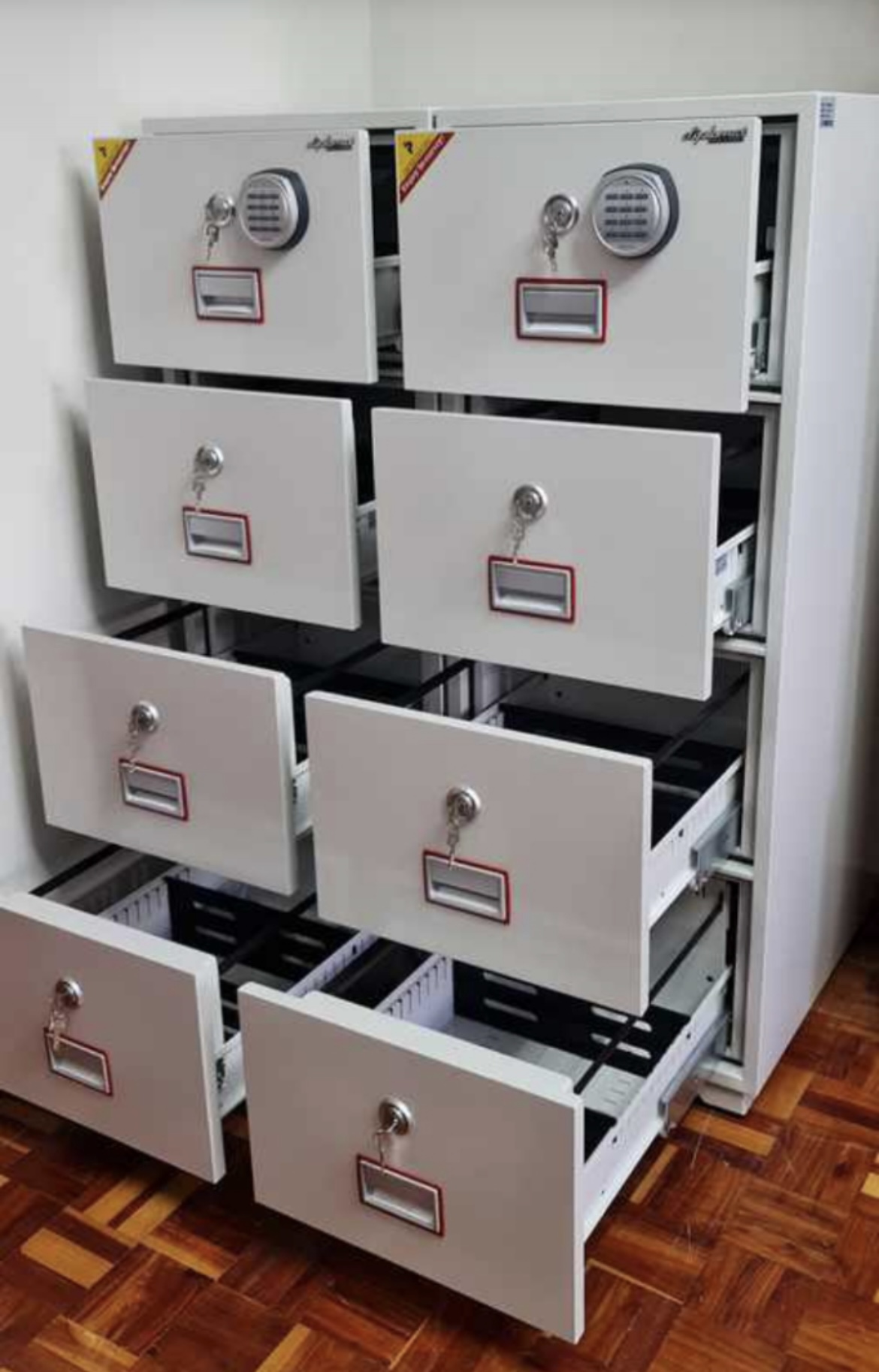
Office Filing Cabinets: How Do You Choose the Right One?
Where Can You Buy Office Filing Cabinets in Kenya?
Office filing cabinets help businesses organise contracts, invoices, employee records, customer documents, and other important paperwork. If you are looking for office filing cabinets in Kenya, Jobel Services can help you explore suitable office furniture and document storage options.
The right filing cabinet should provide enough space for your records, fit comfortably in your office, and allow staff to retrieve documents without difficulty. You should also consider security, durability, drawer capacity, and the type of files you use.
Whether you run a small business, corporate office, school, clinic, law firm, or accounting practice, organised filing can save time and reduce paperwork clutter.
Before purchasing, compare the available cabinet designs, drawer configurations, materials, locking systems, and dimensions. These details will help you choose a filing solution that supports your daily operations.

https://jobelservices.co.ke/product/duplex-office-cabinets/
Why Does Your Business Need an Office Filing Cabinet?
Although many businesses use digital documents, physical paperwork remains important in numerous workplaces. Filing cabinets provide a designated place to store records and keep them organised.
1. Keep Documents Organised
A filing cabinet allows you to arrange documents by category, date, department, customer, or reference number.
For example, a business can separate invoices from employee records and supplier contracts. This makes it easier for authorised staff to locate the right document when needed.
2. Protect Important Paperwork
A suitable cabinet can help protect documents from everyday handling, accidental displacement, and general office clutter.
Lockable cabinets can also restrict casual access to sensitive records. However, a lock alone does not guarantee complete security, so confidential documents may require additional access controls.
3. Save Office Space
Filing cabinets help consolidate paperwork into a designated storage area instead of leaving files spread across desks and shelves.
Vertical cabinets may be useful where floor space is limited, while wider cabinets may suit offices that have enough room for horizontal storage.
4. Improve Staff Productivity
When employees know where documents belong, they spend less time searching for paperwork.
A consistent filing system, combined with clearly labelled folders and drawers, can improve administrative efficiency.
5. Support Record Management
Businesses often need to retain documents for operational, financial, contractual, or legal reasons.
A filing cabinet can support a structured record-management system. However, you should also follow the applicable rules for document retention, confidentiality, and secure disposal.
https://www.jobelgeneralhardware.com/shop
metallic cabinets
What Types of Office Filing Cabinets Can You Choose From?
Filing cabinets are available in different configurations. The best choice depends on your paperwork volume, available space, and filing method.
Two-Drawer Filing Cabinets
Two-drawer cabinets offer compact storage for businesses with moderate filing requirements.
They may suit small offices, home offices, reception areas, and individual workstations. Their smaller size can make them easier to accommodate beside a desk.
Before choosing one, check whether the drawers can hold your existing files and whether the cabinet provides enough capacity for future paperwork.
Three-Drawer Filing Cabinets
Three-drawer cabinets provide additional storage while remaining suitable for many ordinary office layouts.
You can allocate separate drawers to different document categories, departments, or periods. This can make filing easier when several types of records need to remain accessible.
Check the total height and available drawer space before placing the cabinet beneath a desk or in a narrow area.
Four-Drawer Filing Cabinets
Four-drawer cabinets offer greater vertical storage capacity and can suit workplaces that maintain larger volumes of paperwork.
They may be useful in accounting departments, administrative offices, schools, and businesses with extensive paper records.
Because these cabinets can be tall and heavy, assess their stability, installation requirements, and drawer safety features before buying.
Vertical Filing Cabinets
Vertical filing cabinets have drawers arranged one above another.
They are useful when you want to store documents in a relatively narrow floor area. However, taller models may require more overhead clearance and careful attention to stability.
Check the drawer depth and internal dimensions to ensure they accommodate the files you use.
Lateral Filing Cabinets
Lateral filing cabinets typically have wider drawers that allow files to be arranged from side to side.
They can work well in offices that have more horizontal space available. Depending on the design, their wider drawers may make it easier to see several file categories at once.
However, measure the cabinet’s width and drawer-opening space before installation.
Lockable Filing Cabinets
Lockable filing cabinets provide an additional barrier against unauthorised access.
They may be appropriate for confidential business paperwork, personnel files, financial records, and other documents that should not be openly accessible.
Check whether the locking system secures all drawers or only certain compartments. Also ask about replacement keys and access procedures.
Mobile Filing Cabinets
Mobile filing cabinets are compact units fitted with wheels, allowing them to be moved around a workplace.
They may suit individual desks or flexible office layouts. Some designs fit beneath desks, although you should confirm the actual height and available legroom.
Check the wheel quality, braking arrangement, drawer capacity, and stability before purchasing.
How Do You Choose the Right Office Filing Cabinet?
Choosing a filing cabinet requires more than counting the drawers. Consider the following factors before making a purchase.
1. Estimate Your Document Storage Needs
Start by reviewing the amount of paperwork your business maintains.
Consider how many files you have now and how quickly the collection grows. A small business with a few folders may need a compact cabinet, while a busy administration department may require several larger units.
Also decide which records must remain close to staff and which can be stored in a separate archive area.
Buying tip: Estimate the number of folders you need to store and take a sample folder when assessing cabinet dimensions.
2. Check File Compatibility
Not every filing cabinet accommodates every type of folder.
Consider whether you use suspension files, standard folders, lever-arch files, ring binders, or document boxes. Check the internal drawer dimensions and any required rails or supports.
If your paperwork uses a specific filing format, confirm compatibility before purchasing.
3. Measure Your Office Space
Measure the available width, height, and depth before choosing a cabinet.
Remember that drawers extend beyond the cabinet body when opened. You must leave enough room for staff to retrieve files safely.
Also consider doorways, desks, walkways, and nearby furniture. A cabinet that fits against a wall may still obstruct movement when its drawers are open.
4. Choose the Right Number of Drawers
The number of drawers affects storage capacity, accessibility, and the cabinet’s overall dimensions.
Two- or three-drawer models may suit smaller offices, while four-drawer models may provide more storage for businesses with larger filing requirements.
However, more drawers do not automatically mean better value. Compare usable capacity and the size of each drawer.
5. Compare Materials and Construction
Filing cabinets may be made from metal, wood-based boards, or other materials, depending on the design.
When comparing options, consider:
- Metal cabinets: Often used for general office document storage. Check the construction, finish, drawer movement, and resistance to corrosion.
- Wood-based cabinets: Can complement office desks and other furniture. Confirm the material, edge finish, and suitability for the intended load.
- Other designs: Assess their construction and maintenance requirements against your workplace needs.
Pay attention to drawer runners, handles, joints, and the overall structure. These components affect everyday usability.
6. Consider Security and Confidentiality
If you store sensitive documents, look for a suitable locking system.
Think about who needs access, how keys will be managed, and whether different departments need separate storage arrangements.
For highly confidential records, consider additional safeguards such as restricted access to the room and secure document-handling procedures.
Do not assume that every lockable cabinet offers the same level of security.
7. Check Drawer Safety and Stability
Fully loaded filing cabinets can become heavy. Opening several drawers at once may also affect stability.
Look for suitable anti-tip features where available and follow the manufacturer’s instructions for loading and installation.
Place heavier files in lower drawers where practical, avoid exceeding the recommended capacity, and train staff to close drawers after use.
8. Think About Ease of Use
Drawers should open smoothly and provide enough access to the files inside.
Consider how frequently staff will retrieve documents and whether the cabinet’s height suits the people using it.
If employees will use the cabinet throughout the day, convenient drawer movement and clear labelling can make a noticeable difference.
9. Plan Your Filing System
A cabinet is more useful when it supports a clear filing method.
You might organise documents by year, customer, department, transaction type, or record category. Labels can help staff return documents to the correct drawer.
For businesses with several employees, establish consistent naming and filing procedures to reduce misplaced records.
10. Set a Practical Budget
The cost of office filing cabinets can vary according to dimensions, materials, drawer configuration, locking systems, and construction quality.
Compare the total value rather than selecting a cabinet based only on its price.
Ask whether the quoted price includes delivery, assembly, or installation. Confirm the specifications and final cost directly with the supplier before ordering.
Office Filing Cabinets vs Office Storage Cabinets: Which Should You Choose?
Office filing cabinets and general storage cabinets can both help organise a workplace, but their internal layouts may differ.
Choose a filing cabinet when:
- You need organised storage for paper records.
- Your documents are arranged in folders or suspension files.
- Staff need regular access to specific files.
- You need a dedicated place for administrative records.
Choose a general office storage cabinet when:
- You need to store stationery, supplies, equipment, or mixed items.
- Adjustable shelves are more useful than drawers.
- You want to conceal a variety of office materials.
- Your storage needs do not depend on a specific filing format.
Some businesses benefit from using both. Filing cabinets can hold paperwork, while storage cabinets accommodate supplies and equipment.
Common Mistakes to Avoid When Buying Filing Cabinets
Buying Without Checking File Sizes
A cabinet may look large enough but still fail to accommodate your folders. Confirm internal drawer dimensions and compatibility before purchasing.
Ignoring Drawer Clearance
Drawers need space to open fully. Measure the area in front of the cabinet and ensure it will not block a walkway.
Choosing Too Little Storage
A cabinet that is already full when installed may soon become inconvenient. Estimate future document growth before deciding on capacity.
Overlooking Security Requirements
If you store confidential information, check the locking arrangement and establish clear access procedures.
Ignoring Cabinet Stability
Heavy filing cabinets need appropriate loading and installation. Follow the manufacturer’s guidance and avoid opening several loaded drawers simultaneously unless the design explicitly supports this.
Failing to Organise Documents
Even a high-capacity filing cabinet can become disorganised without a consistent filing system. Use clear labels and return files to their assigned locations after use.
Where Can You Buy Office Filing Cabinets in Kenya?
If you need to organise business records, start by identifying the types of files you use, the amount of paperwork you maintain, and the available installation space.
Jobel Services is located at Gikomba, Beaver House, opposite NCBA Bank, Nairobi. You can visit the business to discuss your office furniture requirements and enquire about suitable filing and storage options.
Before making an enquiry, prepare these details:
- The number and type of files you need to store.
- The available space for the cabinet.
- Your preferred number of drawers.
- Whether you require a lockable design.
- Your preferred material and finish.
- Your budget and any delivery or installation needs.
You can also share photos of your office and measurements of the intended location. This can help you discuss suitable options before making a purchase.
Confirm current availability, dimensions, file compatibility, locking features, prices, and delivery arrangements directly with Jobel Services.
Frequently Asked Questions About Office Filing Cabinets
What is the best filing cabinet for a small office?
A compact two- or three-drawer filing cabinet may suit a small office. However, the right choice depends on your document volume, folder sizes, available space, and security requirements.
Are metal filing cabinets better than wooden ones?
Neither option is automatically better for every workplace. Metal cabinets may suit practical document storage, while wood-based designs may complement certain office interiors. Compare construction, drawer operation, maintenance, and load capacity.
Should an office filing cabinet have a lock?
A lock is useful when documents should not be accessible to everyone. Consider the sensitivity of your records, access procedures, and whether additional security measures are necessary.
What is the difference between vertical and lateral filing cabinets?
Vertical cabinets generally arrange drawers one above another and use a relatively narrow footprint. Lateral cabinets usually have wider drawers and require more horizontal space. The best option depends on your office layout and filing method.
How do I organise an office filing cabinet?
Group documents into clear categories, label drawers, and arrange files consistently. You can sort them by date, customer, department, or document type. Review stored records regularly and follow appropriate retention and disposal procedures.
How can I maintain an office filing cabinet?
Keep the cabinet clean, avoid overloading drawers, and inspect handles, runners, locks, and fixings periodically. Follow the manufacturer’s guidance and address any stability or drawer-operation problems promptly.
Where can I enquire about office filing cabinets in Nairobi?
Visit Jobel Services at Gikomba, Beaver House, opposite NCBA Bank, Nairobi, to discuss your document storage requirements and confirm suitable options.
Conclusion: Choose Office Filing Cabinets That Improve Organisation
The right office filing cabinet can help your business organise documents, improve access to records, and reduce workplace clutter.
Before buying, assess your file sizes, storage capacity, available space, locking requirements, drawer configuration, and cabinet stability. These details will help you choose a practical solution for your office.
For office filing cabinet enquiries in Nairobi, visit Jobel Services at Gikomba, Beaver House, opposite NCBA Bank, Nairobi. Bring your measurements or share photos of your intended storage area to discuss suitable options for your business.
