

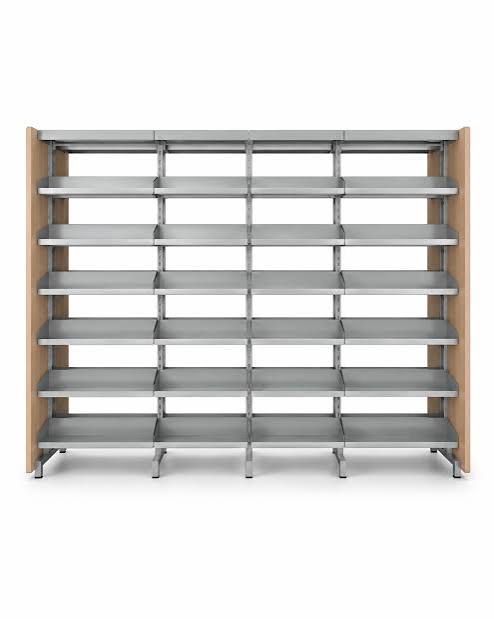
Library Shelving: How Do You Choose the Right Shelves?
Library Shelving: What Should You Consider Before Buying?
If you need to buy library shelving in Kenya, choose shelves that accommodate your book collection, support the expected weight, and fit your available space. The right library shelving system should make books easy to organise and retrieve while leaving enough room for readers and staff to move safely.
Whether you are furnishing a school library, college resource centre, community library, or office reading room, assess shelf height, depth, construction, load capacity, and layout before purchasing. These factors help you use available space efficiently without overcrowding the room or making books difficult to reach.
Jobel Services serves customers looking for furniture and workspace solutions in Nairobi. Before making an enquiry, estimate the number of books you need to store, measure the available floor area, and decide whether you prefer freestanding shelves, wall-mounted units, or larger shelving systems.
Use these factors to guide your purchase:
- Capacity: Estimate how many books the shelves must accommodate.
- Dimensions: Check shelf height, width, depth, and available floor space.
- Load capacity: Confirm that the shelves can support the expected weight.
- Materials: Compare metal, wood, and other suitable construction options.
- Accessibility: Ensure readers and staff can reach books safely.
- Layout: Allow adequate room for movement between shelving units.
- Future expansion: Consider whether the collection is likely to grow.
For enquiries, contact Jobel Services at Gikomba, Beaver House, opposite NCBA Bank, Nairobi. Sharing photos, room measurements, and your storage requirements can help you discuss suitable options before purchasing.
https://jobelservices.co.ke/product/duplex-office-cabinets/
What Is Library Shelving?
Library shelving refers to shelves or shelving units designed to store and organise books, journals, magazines, reference materials, and other reading resources.
Libraries use shelving to arrange collections by subject, author, title, classification, or another organisational system. Depending on the space and storage needs, a library may use freestanding units, wall-mounted shelves, double-sided shelving, or specialised storage systems.
The best option depends on the size of the collection, the available room, the weight of the materials, and how frequently users need access.
For example, a small school reading room may need a few simple shelving units, while a college library may require multiple rows of shelves with clearly defined walkways.
https://primepathsolutions.co.ke/shop/
Why Is Good Library Shelving Important?
1. It Keeps Books Organised
Proper shelving gives every book or resource a designated location. This makes it easier for readers and staff to find materials and return them after use.
You can organise books by subject, class level, author, or another system suited to your library. Clear labels can make the arrangement easier to understand.
2. It Makes Better Use of Available Space
A suitable shelving layout can increase storage capacity without unnecessarily filling the room.
Tall shelving uses vertical space, while wall-mounted units can free up floor area. However, shelf height must remain practical for the intended users, and the installation must be appropriate for the wall and expected load.
3. It Supports Safe Book Storage
Books can become heavy when stored in large quantities. Shelves must be suitable for the expected load and assembled according to the manufacturer’s instructions.
Properly selected shelving reduces the risk of sagging shelves, unstable units, and damage caused by overloading.
4. It Improves Access for Readers
Books should be easy to identify and retrieve. Suitable shelf spacing, clear labels, and well-planned walkways can improve the reading experience.
Schools should consider the ages and heights of their readers when selecting shelf dimensions.
5. It Supports Future Collection Growth
Libraries often add new books, reference materials, and educational resources. Choosing a shelving system with some spare capacity can reduce the need for immediate replacement as the collection grows.
However, avoid buying excessive shelving if the available room cannot accommodate it safely.
What Types of Library Shelving Can You Choose?
Different shelving designs suit different spaces and collections.
1. Freestanding Library Shelves
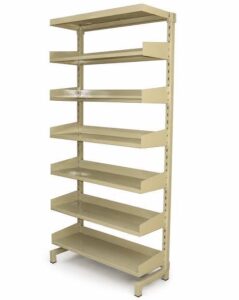
Freestanding shelving units stand independently on the floor. They suit school libraries, reading rooms, offices, and other spaces that need accessible book storage.
Before purchasing, check the unit’s dimensions, stability, load capacity, and installation requirements. Tall units may need suitable anchoring to prevent tipping, particularly in busy spaces.
2. Wall-Mounted Library Shelves
Wall-mounted shelves attach directly to a wall. They can work well in small libraries, classrooms, and reading corners where floor space is limited.
The wall structure and fixing method must be suitable for the intended load. Heavy books can place considerable stress on brackets and fixings, so confirm the installation requirements before using this option for large collections.
3. Metal Library Shelving
Metal shelving can provide a practical option for libraries that require sturdy storage and regular use.
Check the frame construction, shelf thickness, joints, finish, and stated load capacity. The quality of the design and assembly matters as much as the material itself.
Metal shelves may suit institutions that need several shelving units arranged in rows.
4. Wooden Library Shelving
Wooden shelving offers a traditional appearance and can suit school libraries, offices, and reading rooms.
The suitability of a wooden unit depends on the material, construction, shelf support, and finish. Check for sagging, weak joints, and surfaces that may be difficult to maintain.
5. Double-Sided Library Shelving
Double-sided shelving provides storage on both sides of a unit. It can increase book capacity in larger libraries and resource centres.
However, this design requires enough space for readers to access both sides. Plan the walkways and end access before deciding how many units the room can accommodate.
6. Adjustable Library Shelving
Adjustable shelving allows the shelf positions to be changed to accommodate different book heights.
This can be useful for collections that contain textbooks, large reference books, journals, and smaller publications. Confirm how the adjustment system works and whether the shelves remain secure at the chosen positions.
7. Compact Library Shelving
Compact shelving is intended to maximise storage within a limited footprint. Some systems use closely arranged units or movable mechanisms.
These systems require careful planning because access routes, floor capacity, installation, and operating requirements may differ from ordinary shelves. For smaller schools and libraries, conventional freestanding shelving may be more practical.
How Do You Choose the Right Library Shelving?
Before buying library shelving, assess the following factors.
1. Estimate the Size of Your Book Collection
Start by estimating how many books and other materials you need to store.
Count the current collection where practical, and consider likely additions. Also, identify oversized books, reference volumes, magazines, and materials that may need different shelf dimensions.
This information helps you estimate the number of shelves and units required.
2. Measure the Available Space
Measure the room’s length, width, and height. Record the positions of doors, windows, pillars, sockets, and other fixed features.
Next, plan where each shelving unit will stand. Allow sufficient room for people to move between shelves, retrieve books, and access exits.
Do not fill the room with shelving based only on the total floor area. The layout must account for the depth of the units and the space needed to use them safely.
Buying tip: Take photographs of the room and prepare a simple floor plan with measurements. Share these details when discussing shelving options with a supplier.
3. Choose Suitable Shelf Dimensions
Shelf dimensions should match the books and resources you intend to store.
- Height: Consider the tallest materials and the users’ ability to reach them.
- Depth: Make sure books fit securely without unnecessary overhang.
- Width: Check the expected load and the shelf’s construction before choosing long spans.
- Vertical spacing: Allow enough clearance for books to be removed and returned easily.
A shelf that is too shallow may not accommodate larger books. A shelf that is unnecessarily deep can waste space and make materials harder to reach.
4. Check Load Capacity
Books can place substantial weight on shelving, especially when several rows are filled.
Check the manufacturer’s stated load capacity for each shelf and the complete unit. Confirm whether the stated limit applies to an evenly distributed load and follow the manufacturer’s instructions.
Do not estimate capacity based on appearance alone. Shelf material, thickness, span, supports, and fixing methods all affect how much weight the unit can safely carry.
For large collections, request the relevant specifications before purchasing.
5. Compare Materials and Construction
The right material depends on your budget, storage requirements, and expected usage.
Metal shelving: Can provide sturdy storage when properly designed and assembled. Inspect the frame, shelf supports, joints, and finish.
Wooden shelving: Can suit libraries that prefer a traditional appearance. Check the material, shelf thickness, joints, and resistance to everyday wear.
Engineered wood: May provide a cost-conscious option for selected applications. Confirm that the product is suitable for the expected book weight and environmental conditions.
Regardless of the material, inspect the unit’s stability and follow the manufacturer’s assembly and installation requirements.
6. Consider Shelf Height and Reader Accessibility
Libraries serve users of different ages and abilities. A shelf arrangement that works for adults may be difficult for younger children.
Place frequently used materials where the intended readers can reach them safely. Use higher shelves for suitable materials that do not need frequent access, and avoid encouraging users to climb shelving.
For school libraries, consider the age groups and whether staff need access to higher shelves for book management.
7. Plan the Layout and Walkways
The shelving arrangement affects how comfortably readers move through the library.
Single-sided shelves may work well along walls, while double-sided units can create organised rows in larger rooms. Ensure that the arrangement leaves adequate access to entrances and exits.
For school and community libraries, consider how several users will move through the space at the same time.
If the room is small, compare fewer appropriately sized units with a larger number of narrow units. The best layout balances storage capacity with accessibility.
8. Allow for Future Expansion
If your collection is growing, consider leaving space for additional shelves or choosing a compatible modular system.
However, confirm that future units will fit the room and can be installed without blocking access routes. Expansion should be part of the layout plan rather than an afterthought.
9. Consider Labels and Organisation
Shelving works best when books are arranged consistently.
Plan how you will label shelves, divide subjects, and identify different collections. Clear labels can reduce the time readers spend searching for materials.
You may also want separate areas for reference books, children’s books, periodicals, and frequently used resources.
How Do You Choose Library Shelving for Schools and Colleges?
Schools and colleges have different storage and access requirements. Consider the following needs when planning your purchase.
Primary School Libraries
Choose shelves with dimensions appropriate for younger readers. Keep commonly used books within easy reach, and ensure the layout supports supervised movement.
Stable construction and practical cleaning requirements are also important.
Secondary School Libraries
Secondary-school libraries may store textbooks, revision guides, novels, and reference materials. Choose shelves that accommodate different book sizes and the expected weight of the collection.
Consider whether adjustable shelves would help you reorganise materials as the collection changes.
Colleges and Universities
Larger academic collections may require more shelving capacity and a structured layout. Consider subject-based organisation, reference materials, journals, and future expansion.
For large installations, seek suitable specifications for shelf loads, anchoring, and overall system stability.
Community Libraries
Community libraries may serve readers of different ages. Consider a layout that balances storage capacity with accessibility and clear navigation.
Office Resource Rooms
Offices may use shelving for manuals, training materials, files, and reference books. Choose shelf dimensions based on the actual materials rather than assuming that all resources have standard book sizes.
Library Shelving vs Office Shelving: What Is the Difference?
Both systems provide storage, but their selection criteria may differ.
| Feature | Library Shelving | Office Shelving |
|---|---|---|
| Main purpose | Books, journals, and reading resources | Office supplies, files, equipment, and documents |
| Shelf spacing | Often planned around book dimensions | Depends on the stored items |
| Organisation | May use subject or classification labels | Often organised by department or item type |
| Accessibility | Designed for readers and library staff | Designed around office tasks |
| Layout | May include rows and reading areas | Depends on the workspace and storage needs |
Some office shelving units can store books effectively. However, confirm their dimensions, stability, and load capacity before using them for a large library collection.
Common Mistakes to Avoid When Buying Library Shelving
Buying Without Measuring the Room
Shelves that are too deep or too tall can make the room difficult to use. Measure the space and plan the layout before purchasing.
Ignoring Shelf Load Capacity
Books can be heavy. Confirm the load limits and ensure the shelves are suitable for the intended collection.
Choosing Shelves That Are Too Deep
Excessive depth can waste space and make it harder to identify books. Match shelf depth to the materials you intend to store.
Overlooking Stability and Anchoring
Tall or heavily loaded units may need suitable anchoring. Follow the manufacturer’s installation requirements and avoid using shelving that wobbles or has damaged supports.
Failing to Plan Reader Access
A layout with insufficient space between units can make browsing difficult. Account for readers, staff, and safe access to exits.
Buying Too Little Capacity
A shelving system with no room for collection growth may quickly become overcrowded. Estimate current needs and allow reasonable capacity for future additions.
Choosing by Appearance Alone
An attractive unit may not suit heavy books or frequent use. Evaluate the construction, dimensions, load capacity, and maintenance needs before buying.
How Do You Maintain Library Shelving?
Regular maintenance helps keep shelving safe and functional.
- Remove dust using a method suitable for the material.
- Inspect shelf supports, joints, brackets, and fasteners.
- Check for sagging shelves and signs of instability.
- Keep books within the stated load limits.
- Avoid unevenly concentrating heavy books on unsupported sections.
- Follow the manufacturer’s instructions for cleaning and care.
- Inspect wall-mounted shelves and their fixings periodically.
- Keep walkways clear of books and other objects.
If a shelf bends, a fixing becomes loose, or a unit becomes unstable, remove excess weight and address the problem before returning it to normal use.
Where Can You Buy Library Shelving in Kenya?
If you are looking for library shelving in Kenya, start by identifying the size of your collection, the room dimensions, the expected load, and the preferred shelving design.
Jobel Services, located at Gikomba, Beaver House, opposite NCBA Bank, Nairobi, serves customers looking for furniture and workspace solutions.
Before making an enquiry, prepare these details:
- Approximate number of books and other materials.
- Available room width, depth, and height.
- Preferred shelf material and design.
- Expected weight and sizes of the stored items.
- Whether you need freestanding, wall-mounted, or double-sided shelving.
- Your budget and quantity requirements.
You can also share photographs of the room and a simple floor plan. For larger school or institutional projects, include the number of shelving units required and any specific storage needs.
Ready to buy library shelving? Contact Jobel Services to discuss your requirements and explore suitable options. Provide your measurements and storage details, and confirm the current price, availability, delivery arrangements, and installation requirements before ordering.
Frequently Asked Questions About Library Shelving
1. Which library shelving is best for schools?
The best option depends on the book collection, learners’ ages, available space, and expected load. Choose stable shelves with suitable dimensions and a layout that allows readers to access books safely.
2. Is metal shelving suitable for libraries?
Yes, metal shelving can be suitable when its construction, finish, and load capacity match the intended use. Check the manufacturer’s specifications before storing heavy books.
3. How deep should library shelves be?
Shelf depth should accommodate the books and resources being stored. Measure the largest materials in the collection and compare those dimensions with the usable shelf depth.
4. How much weight can library shelves hold?
Capacity varies by material, construction, shelf span, supports, and installation. Follow the manufacturer’s stated load limits rather than estimating capacity from appearance.
5. Are wall-mounted library shelves a good option?
They can work well in small spaces, provided the wall, brackets, and fixings are suitable for the intended load. Heavy book collections require particular attention to installation and support.
6. Should library shelves be adjustable?
Adjustable shelves can be useful when storing books and resources of different heights. They also make it easier to reorganise a collection as requirements change.
7. How do I calculate the number of shelving units I need?
Estimate the collection size, measure the books and available room, and check each unit’s usable shelf space. Also allow for walkways, reader access, and future additions.
8. What should I confirm before buying library shelving in bulk?
Confirm the dimensions, materials, load capacity, quantities, price, availability, delivery arrangements, and installation requirements. For large projects, request product specifications and inspect a sample where possible.
Conclusion: Choose Library Shelving That Fits Your Collection
The right library shelving system should accommodate your books, support their weight, fit the available room, and make resources easy to organise and retrieve.
Before purchasing, compare shelf dimensions, load capacity, materials, stability, and reader accessibility. Schools and institutions should also plan the layout and allow reasonable room for future collection growth.
For library shelving enquiries in Nairobi, contact Jobel Services at Gikomba, Beaver House, opposite NCBA Bank. Share your room measurements, photographs, collection size, and preferred specifications to discuss suitable options.
