

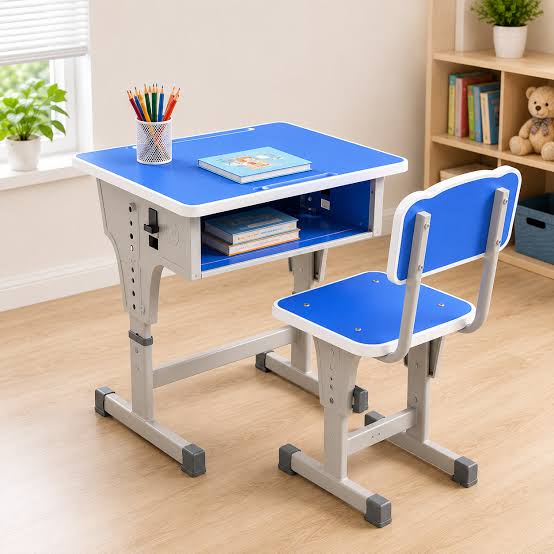
Study Desks: How Do You Choose the Right One?
Study Desks: What Should You Consider Before Buying?
If you need to buy study desks in Kenya, choose a desk that gives the learner enough space for books, notebooks, writing materials, and a computer when necessary. The right study desk should fit the room, support a comfortable sitting position, and provide enough storage for everyday learning materials.
Whether you are furnishing a student’s bedroom, a home-learning area, a school, or a tuition centre, compare the desk dimensions, height, construction, and storage features before purchasing. A desk that is too small can become cluttered, while one that is too large may reduce valuable floor space.
Jobel Services serves customers looking for furniture and workspace solutions in Nairobi. Before making a purchase, prepare your room measurements, the learner’s needs, and your preferred desk design.
When comparing study desks, consider these essential factors:
- Desk size: Allow enough room for books, writing, and other learning materials.
- Height: Choose a desk that supports a comfortable working position.
- Storage: Decide whether drawers or shelves would help organise supplies.
- Durability: Check the materials, joints, and overall stability.
- Available space: Ensure the desk fits without obstructing doors or walkways.
- Future needs: Consider whether the desk will accommodate additional books or a computer later.
For enquiries, contact Jobel Services at Gikomba, Beaver House, opposite NCBA Bank, Nairobi. Sharing a photo of the intended space and its measurements can help you discuss suitable options before buying.
https://jobelservices.co.ke/product/office-desk/
What Are Study Desks?
Study desks are work surfaces designed for reading, writing, homework, revision, online learning, and other educational activities. Depending on the design, they may include drawers, shelves, book compartments, or space for a laptop or desktop computer.
Students use study desks at home, in schools, in libraries, and in tuition centres. Parents may also use them to create a dedicated learning area for children.
Unlike a desk intended mainly for office administration, a study desk is often selected around the learner’s age, study materials, available room, and daily routine. However, many ordinary office desks can also serve as effective study desks when their dimensions and features suit the user.
https://primepathsolutions.co.ke/shop/
Why Are Study Desks Important?
A suitable study desk helps learners organise their materials and maintain a consistent place for schoolwork.
1. They Create a Dedicated Learning Space
A designated study area helps keep books, stationery, and assignments together. This arrangement can make it easier to prepare for lessons and return to unfinished tasks.
For households with limited space, a compact desk can create a useful learning area without requiring a separate study room.
2. They Provide Space for Learning Materials
Students may need textbooks, exercise books, pens, rulers, calculators, laptops, and other supplies. A desk with adequate surface space allows them to arrange these materials within reach.
If the learner uses several large textbooks at once, choose a wider desktop rather than relying on a small writing surface.
3. They Support Comfortable Study Sessions
Desk height and chair selection affect how comfortably a student reads and writes. A suitable arrangement helps the learner sit with relaxed shoulders and a comfortable arm position.
The desk should work with the learner’s chair, not be selected in isolation. Children may outgrow their furniture, so consider their current height and expected use when choosing a desk.
4. They Help Reduce Clutter
Drawers and shelves can provide designated places for stationery, notebooks, and other supplies. Consequently, the learner can keep the main surface clear for writing and reading.
However, storage should not take up so much space that it restricts legroom or makes frequently used materials difficult to reach.
What Types of Study Desks Can You Buy?
Study desks come in several designs. The best choice depends on the learner’s age, available space, and preferred way of studying.
1. Simple Writing Study Desks
Simple study desks provide a flat work surface without extensive storage. They suit learners who mainly need space for writing, reading, and completing homework.
Their straightforward design can also work well in small bedrooms or shared spaces. Before buying, check that the surface can accommodate the learner’s usual books and notebooks.
2. Study Desks With Drawers
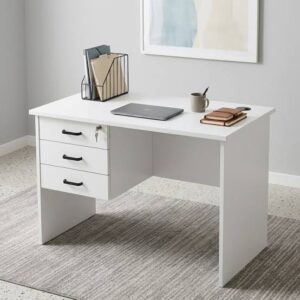
These desks include one or more drawers for stationery, exercise books, documents, and smaller learning materials.
They are useful for learners who want to keep supplies organised. Check the drawer size, ease of opening, and available knee space before choosing a model.
3. Study Desks With Shelves
Shelved study desks provide extra space for textbooks, reference materials, and selected accessories.
They can be useful where a separate bookcase would take up too much floor space. However, confirm that the shelves are easy to reach and provide sufficient support for the intended items.
4. Compact Study Desks
Compact desks suit small bedrooms, bedsitters, shared rooms, and homes where floor space is limited.
They provide a dedicated work surface without requiring a large furniture footprint. Nevertheless, ensure the desk is large enough for the learner’s actual activities.
5. Computer Study Desks
Computer study desks accommodate digital learning equipment, such as laptops, monitors, keyboards, and accessories.
They can suit students taking online classes or completing computer-based assignments. Choose a model with adequate depth and practical cable management if the learner will use electronic equipment regularly.
6. Corner Study Desks
Corner study desks use the corner of a room to provide a larger work area.
They may suit students who need space for both books and a computer. Measure both sides of the corner before buying, and check whether the design leaves enough room for the chair.
7. Shared Study Desks
Shared study desks provide space for two or more learners. They can work well in family homes, schools, libraries, and tuition centres.
When selecting one, consider the number of users, the space each learner needs, and whether they require separate storage areas.
How Do You Choose the Right Study Desk?
Before buying study desks, assess the following factors to ensure the furniture matches the learner’s needs.
1. Measure the Available Space
Measure the width and depth of the area where the desk will stand. Include nearby furniture, doors, windows, sockets, and other obstacles in your planning.
Also, allow enough space for the chair to move backwards and for the learner to enter and leave the workspace comfortably.
For a corner desk, measure both sides of the corner. If the room is shared, consider how the desk will affect movement and access to other furniture.
Buying tip: Take a clear photo of the intended location and record its measurements. Share these details with the seller when discussing suitable options.
2. Choose a Suitable Desk Height
The desk should allow the learner to sit comfortably while reading and writing. Ideally, the shoulders should remain relaxed, and the elbows should rest near a comfortable working angle.
A desk that is too high may encourage raised shoulders. One that is too low can cause excessive bending.
For younger learners, consider their current height and chair dimensions. If the desk will be used for several years, think about whether the design will remain practical as the learner grows.
3. Check the Desktop Size
The desk must accommodate the learner’s usual materials without becoming overcrowded.
A student who mainly writes in one notebook may need less space than a secondary-school student who uses several textbooks, revision papers, and a laptop.
Before purchasing, consider the largest items that will regularly sit on the desk. Also, leave some free surface area for writing and organising materials.
4. Decide Whether You Need Drawers or Shelves
Storage features can help organise study supplies, but not every learner needs them.
Choose drawers if you want to store stationery, small accessories, or personal items. Consider shelves if the learner has several textbooks or reference books.
If floor space is limited, built-in storage may reduce the need for separate furniture. However, check that the design does not restrict legroom or make the desk difficult to use.
5. Compare Materials and Construction
Study desks are available in different materials, including engineered wood, solid wood, and metal-supported designs.
- Engineered wood: Often provides an affordable option for everyday study use. Check the surface finish and edge quality.
- Solid wood: Can provide a durable, traditional appearance, depending on the wood and construction.
- Metal frames: Can add structural support when properly designed and assembled.
- Laminate surfaces: Can offer a practical finish that is relatively easy to clean.
Regardless of the material, inspect the joints, desktop support, edges, and overall stability. The desk should not wobble during ordinary writing or reading activities.
6. Consider the Learner’s Age and Needs
A study desk for a young child may need different dimensions from one used by a university student.
For younger learners, prioritise an appropriate height, stable construction, and easy access to supplies. Older students may need more desktop space for textbooks, laptops, revision materials, and longer study sessions.
For university students, a desk that accommodates a laptop or monitor can be particularly useful. However, match the design to the actual study routine rather than purchasing unnecessary features.
7. Plan for Lighting and Power Access
Place the desk where the learner can use adequate lighting. Natural light can be useful during the day, while a suitable desk lamp may help during evening study sessions.
If the learner uses a laptop or other electronic equipment, consider nearby power outlets and safe cable routing.
Keep electrical cables away from walkways, and avoid overloading sockets. Position equipment so that cables do not interfere with the chair or create a trip hazard.
8. Think About Long-Term Use
A study desk may be used for several school years, so consider whether its design will remain useful.
A sturdy desk with a practical surface and adequate storage may serve different study activities as the learner progresses. If the learner will eventually need a computer, choose dimensions that can accommodate one where practical.
Still, balance future needs against the available space and budget. The aim is to buy a desk that provides useful features without unnecessary expense.
Which Study Desks Are Best for Small Bedrooms?
Compact study desks, simple writing desks, and selected corner desks can work well in small bedrooms.
The best option depends on the room layout and the learner’s equipment. A compact desk may be sufficient for books and notebooks, while a corner desk may provide additional surface area if the room has an unused corner.
To make the most of limited space:
- Measure the intended location before shopping.
- Choose a desk with enough surface area for the learner’s materials.
- Consider built-in drawers or shelves where useful.
- Avoid designs that obstruct doors, wardrobes, or walkways.
- Check that the chair can move freely.
- Keep the desk’s most frequently used items within easy reach.
A smaller desk is not automatically the better choice. If the learner needs several books and a laptop at the same time, select a size that supports those activities comfortably.
How Do You Choose Study Desks for Schools and Tuition Centres?
Schools and tuition centres should consider durability, the number of learners, classroom dimensions, and ease of maintenance.
For individual learners, single desks can provide dedicated work surfaces. Shared desks may suit selected teaching environments where several learners need to work together.
Before purchasing desks in bulk, assess the following:
Number of learners: Establish how many desks you need and how much space each learner requires.
Classroom layout: Allow sufficient room for movement, teaching activities, and access to doors.
Construction: Compare the materials, joints, stability, and expected maintenance needs.
Storage: Decide whether students need drawers or shelves for their learning materials.
Cleaning: Choose surfaces that can be maintained using appropriate cleaning methods.
Budget: Compare the total requirements, including any delivery or assembly arrangements.
For larger orders, measure the room and plan the desk layout before buying. This reduces the risk of purchasing furniture that cannot be arranged comfortably in the available space.
Study Desks vs Computer Desks: Which Should You Choose?
Study desks and computer desks serve overlapping purposes, but their features may differ.
| Feature | Study Desk | Computer Desk |
|---|---|---|
| Main purpose | Reading, writing, homework, and revision | Computer-based work |
| Surface space | Often arranged for books and writing | Often arranged for monitors and accessories |
| Storage | May include drawers or book shelves | May include drawers, shelves, or equipment space |
| Cable management | Depends on the design | May include dedicated cable features |
| Typical users | School students and learners | Office workers, students, and computer users |
You do not always need separate furniture for studying and computer use. A suitable desk can support both activities if it provides enough surface area, appropriate height, and safe equipment placement.
If the learner regularly uses a computer alongside textbooks, choose a desk that accommodates both without overcrowding the work surface.
Common Mistakes to Avoid When Buying Study Desks
Choosing a Desk Without Measuring the Room
A desk that looks suitable online may not fit the intended location. Measure the available space before buying.
Ignoring the Learner’s Height
Desk height affects comfort during reading and writing. Consider the learner’s current height and chair when selecting the furniture.
Buying Too Little Desktop Space
A desk may become difficult to use if textbooks, exercise books, and electronic devices compete for limited room. Consider the learner’s daily activities before deciding on dimensions.
Choosing Storage at the Expense of Legroom
Drawers and shelves can be useful, but poorly positioned components may restrict movement. Check the space beneath the desktop.
Focusing Only on Appearance
A good-looking desk may still have weak joints, an unstable frame, or an unsuitable surface. Check construction and usability before purchasing.
Forgetting Future Requirements
A learner may need more books, a laptop, or additional accessories later. Consider likely changes while keeping the purchase within your budget.
How Do You Maintain Study Desks?
Regular care helps keep study desks functional and presentable.
- Wipe the surface with a suitable cloth and cleaner for the material.
- Clean spills promptly to protect the finish.
- Avoid placing excessive weight on unsupported areas.
- Keep books and equipment organised.
- Check screws, joints, and frame connections periodically.
- Avoid dragging heavy objects across the desktop.
- Follow the manufacturer’s instructions for assembly and maintenance.
For desks with drawers, check that the drawers open and close smoothly. Address loose fittings early to help prevent further damage.
Where Can You Buy Study Desks in Kenya?
If you are looking for study desks in Kenya, begin by identifying the learner’s requirements and measuring the available space. Then compare suitable designs based on size, height, materials, storage, and construction.
Jobel Services, located at Gikomba, Beaver House, opposite NCBA Bank, Nairobi, serves customers looking for furniture and workspace solutions.
Before making an enquiry, prepare the following details:
- The learner’s age or general study requirements.
- The available desk width and depth.
- Whether the desk will hold books, a laptop, or a desktop computer.
- Your preferred storage features.
- Your budget and the number of desks required.
You can also share photos of the room and the intended desk location. If you are furnishing a school or tuition centre, provide the classroom measurements and the number of learners.
Ready to buy study desks? Contact Jobel Services to discuss your requirements and explore suitable furniture options. Planning the size and layout before purchasing can help you choose a desk that makes practical use of your available space.
Frequently Asked Questions About Study Desks
1. What size study desk should I buy?
Choose a size that fits the room and accommodates the learner’s books, notebooks, writing materials, and computer equipment where necessary. Measure the available space before purchasing.
2. Which study desk is best for a child?
Choose a stable desk with a suitable height, enough writing space, and accessible storage if needed. Make sure the desk works with the child’s chair and allows a comfortable sitting position.
3. Are study desks suitable for university students?
Yes. University students can use study desks for reading, writing assignments, online classes, and computer-based work. Choose a design that accommodates their books, laptop, and other study equipment.
4. Should I buy a study desk with drawers?
Drawers are useful if the learner needs to organise stationery, notebooks, and smaller supplies. However, a simple desk may be sufficient if storage is already available elsewhere.
5. Can a computer desk be used as a study desk?
Yes. A computer desk can serve as a study desk if it provides enough space for books, writing, and the learner’s other materials.
6. Which material is best for a study desk?
The best material depends on your budget, intended use, and maintenance preferences. Compare the construction, surface finish, stability, and expected wear of the available options.
7. How can I choose a study desk for a small bedroom?
Measure the available space and consider compact desks, simple writing desks, or suitable corner designs. Check that the desk and chair will not obstruct doors or walkways.
8. Can I enquire about study desks for a school?
Yes. When enquiring about multiple desks, provide the number required, classroom dimensions, preferred design, and storage needs. Also confirm pricing, availability, delivery, and assembly arrangements with the seller.
Conclusion: Choose Study Desks That Support Everyday Learning
The right study desks provide learners with practical space for reading, writing, revision, and computer-based activities. To choose well, compare desk dimensions, height, storage, construction, and the available room.
For a home, select a desk that fits the learner’s daily routine. For a school or tuition centre, consider durability, classroom layout, and the number of users before purchasing in bulk.
For study desk enquiries in Nairobi, contact Jobel Services at Gikomba, Beaver House, opposite NCBA Bank. Share your measurements, photos, and requirements to help you discuss suitable options.
