


Office Chair Tilt Tension Knob: How To Choose the Right One?
What Is an Office Chair Tilt Tension Knob?
An office chair tilt tension knob is the control used to adjust how easily an office chair tilts or reclines when the user leans back.
The knob is usually located underneath the seat and is connected to the chair’s tilt mechanism. Turning it can increase or reduce the resistance against the chair’s reclining movement.
A properly working office chair tilt tension knob allows the user to adjust the chair according to their preferred level of reclining resistance.
If the knob is broken, loose, difficult to turn, or no longer changes the tilt tension, the knob or the mechanism connected to it may need inspection or replacement.

https://jobelservices.co.ke/office-chair-seat-plate-vs-office-chair-mechanism/
What Does an Office Chair Tilt Tension Knob Do?
The tilt tension knob controls the resistance of the chair’s tilt mechanism.
Depending on the chair design, turning the knob may:
- Increase reclining resistance
- Reduce reclining resistance
- Make the chair easier to tilt
- Make the chair harder to tilt
- Adjust the chair for different user weights
- Improve reclining control
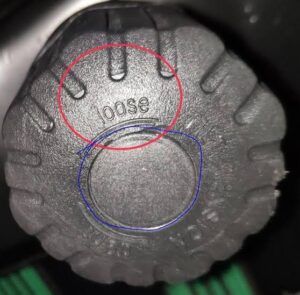
The knob itself is only the user control. The actual tension system is normally located inside the chair mechanism.
This means replacing the knob will not necessarily solve a problem caused by a damaged internal mechanism.
https://primepathsolutions.co.ke/
Where Is the Tilt Tension Knob Located?
On most office chairs, the tilt tension knob is found underneath the seat.
It may be positioned:
- At the front of the mechanism
- Near the centre of the mechanism
- Beside the height adjustment lever
- Under the right or left side of the seat
The exact position depends on the chair mechanism.
Some mechanisms use a large round knob, while others use a smaller handle or integrated adjustment control.
Types of Office Chair Tilt Tension Knobs
Different office chair mechanisms use different tension controls.
Round Tilt Tension Knob
This is one of the most common designs.
The user turns the knob clockwise or counterclockwise to change the resistance of the tilt mechanism.
Large Tension Knob
Some executive and heavy-duty office chairs use larger knobs that are easier to grip.
These can be useful when the tension mechanism requires more turning force.
Small Tension Knob
Basic office chairs may use smaller adjustment knobs.
Although simple, they still need to match the mechanism’s shaft and thread.
Threaded Tension Knob
Some knobs attach to a threaded tension rod.
The thread size and connection must match the existing mechanism.
Integrated Tilt Control
Some modern office chair mechanisms combine the tension adjustment with other controls.
In these cases, replacing only the visible knob may not be possible.
The complete control assembly or mechanism may need to be replaced.
Signs Your Office Chair Tilt Tension Knob Needs Replacement
A damaged knob can make it difficult to control the chair’s reclining resistance.
Common signs include:
- The knob is cracked
- The knob is missing
- The knob spins without changing tension
- The knob is difficult to turn
- The knob keeps coming loose
- The knob no longer connects properly to the tension rod
- The chair’s tilt tension cannot be adjusted
- The knob or shaft is visibly damaged
However, not every tension problem is caused by the knob.
If the knob turns normally but the chair still does not change tension, the internal mechanism may be the problem.
How Do You Choose the Right Office Chair Tilt Tension Knob?
Choosing a replacement based only on appearance can result in an incompatible part.
Before buying an office chair tilt tension knob, check the following.
1. Check the Chair Mechanism
The first step is identifying the mechanism underneath the chair.
Look for:
- Manufacturer markings
- Model numbers
- Mechanism shape
- Position of the adjustment controls
- Tension rod design
A knob designed for one mechanism may not work with another.
2. Check the Connection
Inspect how the existing knob connects to the tension rod.
It may use:
- Threads
- A push-fit connection
- A socket
- A retaining clip
- A shaped shaft
The replacement must use the same connection or a compatible fitting.
3. Measure the Knob
If you are replacing the visible knob, measure:
- Overall diameter
- Overall height
- Shaft opening
- Shaft depth
- Thread diameter
- Thread pitch where applicable
These measurements can help identify a suitable replacement.
4. Check the Thread
For threaded knobs, thread compatibility is particularly important.
A knob can look almost identical but fail to fit because the thread diameter or pitch is different.
Do not force a threaded knob onto an incompatible rod.
5. Consider Grip
The knob should be easy to turn.
A larger knob may provide better grip, but it must still fit within the available space underneath the chair.
6. Check the Mechanism Before Buying
If the tension knob is broken because the mechanism itself is damaged, replacing only the knob may not solve the problem.
Inspect the entire mechanism before ordering a replacement.
How Do You Measure an Office Chair Tilt Tension Knob?
Accurate measurements can help you find the correct replacement.
Follow these steps:
- Inspect the existing knob.
- Measure its outside diameter.
- Measure its height or depth.
- Check the diameter of the mounting opening.
- Measure the shaft connection.
- Check whether the knob is threaded.
- Measure the thread diameter if applicable.
- Check the thread pitch where possible.
- Photograph the knob from different angles.
- Photograph the complete mechanism underneath the seat.
If the knob is missing, photograph the tension rod or mounting point instead.
This information can help a supplier identify the correct component.
Can You Replace an Office Chair Tilt Tension Knob Yourself?
A simple replacement knob can often be installed without replacing the entire mechanism.
A general process is:
- Place the chair in a stable position.
- Locate the tilt tension control underneath the seat.
- Inspect the connection.
- Remove the damaged knob if necessary.
- Compare the replacement with the original.
- Check the thread or shaft connection.
- Fit the replacement carefully.
- Turn it slowly to confirm that it engages correctly.
- Adjust the tension gradually.
- Test the chair while seated.
Do not force the knob if it does not fit.
If the tension rod or mechanism is damaged, stop and inspect the complete assembly before continuing.
Why Is My Office Chair Tilt Tension Knob Not Working?
Several problems can cause the tension control to stop working.
The Knob Spins Freely
If the knob turns without changing resistance, the connection between the knob and tension mechanism may be damaged.
The internal mechanism may also have failed.
The Knob Is Stuck
Dirt, corrosion, mechanical damage, or an internal problem can make the knob difficult to turn.
Do not apply excessive force.
The Knob Fell Off
The fixing system may have become loose or damaged.
Check whether the knob itself is broken or whether the tension rod has been damaged.
The Chair Is Still Too Easy to Recline
If the knob turns but the tension does not change, the problem may be inside the chair mechanism rather than with the knob.
The Chair Is Too Hard to Recline
Check whether the tension has been adjusted too tightly.
Turn the control gradually rather than making large adjustments.
Office Chair Tilt Tension Knob vs Tilt Lock
These two controls have different purposes.
The office chair tilt tension knob controls the resistance required to tilt or recline.
The tilt lock controls whether the chair is allowed to tilt or remain in a locked position.
A chair may have both controls.
For example:
- Tilt tension knob = adjusts reclining resistance
- Tilt lock = allows or prevents tilting
Understanding the difference is important when ordering replacement parts.
Office Chair Tilt Tension Knob vs Office Chair Mechanism
The tension knob is the external control used to adjust the tilt resistance.
The office chair mechanism is the larger assembly underneath the seat that controls functions such as tilting, reclining, and locking.
If the knob is damaged but the mechanism works correctly, replacing the knob may be enough.
If the mechanism is damaged, replacing only the knob will not solve the underlying problem.
Before purchasing, identify exactly which component has failed.
Can You Replace the Tilt Tension Knob Without Replacing the Mechanism?
Yes, if the knob is separately replaceable and the underlying mechanism is still working correctly.
Replacing only the knob can be a practical solution when:
- The knob is cracked
- The knob is missing
- The knob is worn
- The connection is damaged only at the knob
- The tension rod still works correctly
However, replacing the complete mechanism may be necessary when the internal tension system has failed.
How Do You Maintain an Office Chair Tilt Tension Knob?
Regular inspection can help prevent problems.
Keep the Area Clean
Remove dust and debris from underneath the chair.
Avoid Excessive Force
Turn the knob gradually.
Do not use pliers or other tools to force it unless the mechanism specifically requires a service procedure.
Inspect the Connection
Check for:
- Loose fittings
- Cracks
- Damaged threads
- Corrosion
- Worn plastic
Check the Mechanism
When cleaning the chair, inspect the mechanism underneath the seat.
A damaged mechanism can affect the operation of the tension control.
Common Mistakes When Replacing a Tilt Tension Knob
Avoid these common mistakes:
- Buying based only on appearance
- Ignoring thread size
- Failing to measure the shaft
- Assuming all office chair knobs are universal
- Forcing an incompatible knob
- Replacing the knob when the mechanism is actually damaged
- Over-tightening the replacement
- Ignoring unusual movement from the chair mechanism
Taking photographs and measurements before buying can prevent many compatibility problems.
Should You Replace the Knob or the Complete Office Chair Mechanism?
The answer depends on what has failed.
Replace only the office chair tilt tension knob when the knob is damaged but the mechanism still works.
Consider replacing the complete mechanism when:
- The tension system has failed
- The chair no longer tilts correctly
- Internal components are damaged
- The control shaft is damaged
- Multiple mechanism functions have stopped working
If the seat, backrest, base, wheels, and other major components are still in good condition, replacing a failed component can extend the useful life of the chair.
Where Can You Buy an Office Chair Tilt Tension Knob in Kenya?
If you need an office chair tilt tension knob in Kenya, identify the chair mechanism and the connection used by the existing knob before purchasing.
Take clear photographs and measurements of the knob and mechanism.
Buy an Office Chair Tilt Tension Knob in Nairobi
Looking for an office chair tilt tension knob in Nairobi? Contact Jobel Services and ask about available office chair components, replacement knobs, and repair solutions.
You can also visit Jobel Services at Gikomba, Beaver House, opposite NCBA Bank, Nairobi, with the old component, photographs, or measurements where possible.
Get the Right Tilt Tension Knob
Do not purchase a replacement simply because it looks similar to your existing knob.
Send Jobel Services clear photographs of the existing knob and the mechanism underneath the chair, together with measurements and chair details before purchasing.
This can help determine whether the replacement is suitable for your office chair.
Whether you need one replacement knob for a home office chair, several components for an office, or parts for a larger office furniture repair project, identifying the correct component before purchasing can save time and unnecessary expense.
Need an office chair tilt tension knob in Kenya? Contact Jobel Services today or visit the shop in Gikomba, Beaver House, opposite NCBA Bank, Nairobi, and ask about suitable office chair knobs and replacement components.
Frequently Asked Questions
What does an office chair tilt tension knob do?
An office chair tilt tension knob adjusts the resistance of the chair when the user leans back or reclines.
Are office chair tilt tension knobs universal?
No. Knobs can differ in size, thread, shaft connection, and compatibility with the chair mechanism.
How do I know which tilt tension knob I need?
Check the chair mechanism, measure the existing knob and connection, and take clear photographs before purchasing.
Can I replace only the tilt tension knob?
Yes, if the knob is separately removable and the internal tension mechanism is still functioning correctly.
Why does my tilt tension knob spin without doing anything?
The knob may no longer be engaging the tension rod, or the internal mechanism may be damaged.
Can a broken tilt tension knob be repaired?
A cracked or damaged knob is generally better replaced. If the underlying tension mechanism is damaged, the complete mechanism may require replacement.
Where is the tilt tension knob located?
It is usually underneath the chair seat and connected to the tilt mechanism.
What is the difference between tilt tension and tilt lock?
Tilt tension controls how much resistance you feel when reclining. Tilt lock controls whether the chair can tilt or remain locked in a position.
Can I use a larger replacement knob?
Only if the connection is compatible and there is enough clearance underneath the chair. The replacement should not interfere with other controls.
Conclusion
An office chair tilt tension knob controls the resistance of the chair’s reclining movement and allows users to adjust how easily the chair tilts.
When replacing one, check the chair mechanism, knob dimensions, shaft connection, thread size, mounting method, and available space.
Do not assume that all office chair tilt tension knobs are interchangeable. A knob that looks similar may have a different connection or thread.
If you are in Nairobi or elsewhere in Kenya, contact Jobel Services for office chair tilt tension knobs and replacement components. Visit the shop in Gikomba, Beaver House, opposite NCBA Bank, Nairobi, with photographs or measurements of your existing component.
Choosing the correct office chair tilt tension knob can restore convenient tilt adjustment without requiring replacement of the entire office chair when the rest of the chair remains in good condition.
