

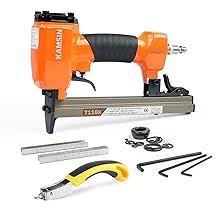
SALI Pneumatic Stapler in Kenya: Price, Uses and Buying Guide
SALI Pneumatic Stapler in Kenya: Which Air Staple Gun Should You Buy for Upholstery Work?
If you run an upholstery workshop, repair sofas or manufacture furniture, the SALI pneumatic stapler from Jobel Services offers an air-powered fastening solution compatible with 1006J, 1008J, 1010J and 1013J staples. It helps you attach suitable upholstery materials to wooden frames during furniture production and repair.
Unlike a manual stapler, a pneumatic stapler uses compressed air to drive staples into materials. This makes it useful for workshops that handle repeated fastening tasks.
However, you should check staple compatibility, operating pressure, compressor requirements and the materials you intend to fasten before purchasing.
Jobel Services supplies the SALI Pneumatic Stapler for upholstery, furniture repair, woodworking and cabinet assembly in Kenya.
This guide explains how the tool works, where you can use it, how to select compatible staples and what to consider before buying one.
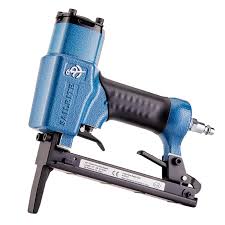
https://jobelservices.co.ke/product/sali-air-nailer-pneumatic-stapler-1006j-1013j/
What Is a SALI Pneumatic Stapler?
A SALI pneumatic stapler is an air-powered fastening tool that uses compressed air to drive staples into suitable materials.
It connects to an air compressor through an air hose. When you operate the trigger, the tool releases compressed air to drive a staple into the working surface.
The SALI model listed by Jobel Services supports 21-gauge crown staples in sizes ranging from 6 mm to 13 mm.
Its listed specifications include:
- Staple compatibility: 1006J, 1008J, 1010J and 1013J.
- Staple length: 6 mm to 13 mm.
- Magazine capacity: 120 staples.
- Operating pressure: 60 PSI to 100 PSI.
- Air inlet: Standard 1/4-inch connection.
- Weight: Approximately 0.8 kg.
- Design: Compact body.
- Applications: Upholstery, furniture repair, woodworking and cabinet assembly.
These specifications help you determine whether the stapler suits your workshop requirements.
Always confirm the tool’s markings and manufacturer instructions before loading staples or connecting it to an air compressor.
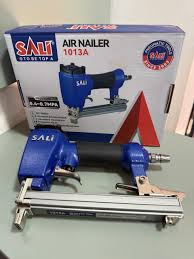
https://www.jobelgeneralhardware.com/shop
What Is a Pneumatic Stapler Used For?
A pneumatic stapler is useful when you need to fasten suitable materials repeatedly. Its applications depend on the staple type, staple length, material thickness and working surface.
Here are some common applications.
1. Sofa Upholstery
Upholstery technicians use staple guns to attach fabric to suitable wooden furniture frames.
For example, when reupholstering a sofa, you may need to secure fabric around the seat, backrest and underside of the frame.
A pneumatic stapler can help you complete these fastening tasks efficiently.
However, choose a staple length that provides adequate grip without penetrating the wrong side of the frame or damaging the upholstery.
2. Office Chair Repairs
Office chair repair involves several components, including seats, backrests, foam padding and upholstery fabric.
During upholstery repairs, technicians may need to secure replacement fabric to suitable wooden sections of a chair.
The SALI pneumatic stapler can support these tasks where its staple specifications match the material and frame.
It is not a universal office chair repair tool. You still need separate equipment for tasks such as replacing gas lifts, castors, armrests and chair mechanisms.
3. Furniture Manufacturing
Furniture manufacturers often perform repeated fastening operations.
A pneumatic stapler can help attach suitable fabric, lining and other materials to furniture frames.
It is particularly useful when production involves several similar pieces of furniture.
4. Cabinet Assembly
Some cabinet-making tasks involve fastening thin panels, backing materials or upholstery components.
A compatible pneumatic stapler can support these applications.
However, do not use short upholstery staples as a substitute for structural screws, nails or other fasteners where the joint requires greater strength.
5. Woodworking and Interior Finishing
The tool can also support selected woodworking and finishing tasks.
These may include attaching suitable decorative materials, fabric coverings and lightweight panels to compatible surfaces.
Always test the fastening depth on a scrap piece before working on the finished product.
Which Staples Does the SALI Pneumatic Stapler Use?
Staple compatibility is one of the most important factors when buying a pneumatic stapler.
The SALI model listed by Jobel Services accepts the following staple sizes:
| Staple type | Length |
|---|---|
| 1006J | 6 mm |
| 1008J | 8 mm |
| 1010J | 10 mm |
| 1013J | 13 mm |
The different lengths allow you to select a staple according to the material and fastening requirements.
What Are 1006J Staples?
1006J staples have a 6 mm leg length.
They may suit applications involving thin materials where a shorter staple provides sufficient holding power.
What Are 1008J Staples?
1008J staples have an 8 mm leg length.
They provide a longer fastening leg than 1006J staples. Their suitability depends on the thickness of the material and the frame.
What Are 1010J Staples?
1010J staples have a 10 mm leg length.
They may suit upholstery and furniture applications that require deeper penetration into a compatible base material.
What Are 1013J Staples?
1013J staples have a 13 mm leg length.
They are the longest of the four sizes listed for this stapler.
Before using them, check the thickness of the material and the depth of the supporting frame. A staple that is too long may penetrate through the material or damage the finished surface.
Important: Staple length is not the only compatibility requirement. Check the staple series, crown dimensions and wire specifications. Do not assume that every staple measuring 6 mm to 13 mm will fit the tool.
How Do You Choose the Correct Staple Length?
The correct staple depends on the combined thickness of the material and the base.
Consider these factors before loading your stapler.
Material Thickness
Thin fabric generally requires a different staple length from thick upholstery layers.
Measure or assess the material stack before selecting a staple.
Frame Material
The supporting frame affects how well the staple penetrates and holds.
Wood density, condition and thickness can influence fastening performance.
Required Holding Strength
A staple must hold the material securely without causing unnecessary damage.
For upholstery, the goal is to achieve firm fastening while maintaining a neat finish.
Staple Penetration
The staple should penetrate sufficiently into the supporting material.
However, it should not pass through the frame or emerge where it could cause injury or damage.
Test different compatible staple lengths on scrap material before starting the main job.
What Air Compressor Does a SALI Pneumatic Stapler Need?
A pneumatic stapler needs compressed air to operate.
The SALI product listing specifies an operating pressure range of 60 PSI to 100 PSI, equivalent to approximately 0.4 MPa to 0.7 MPa.
Your compressor must be capable of supplying air within this range.
Before connecting the stapler, consider the following:
Operating pressure: Your compressor and regulator should support the required pressure range.
Air hose: Use a suitable hose and fitting that match the tool’s standard 1/4-inch air inlet.
Air supply: The compressor must maintain sufficient airflow during repeated fastening.
Pressure regulation: Use a regulator to control the pressure supplied to the tool.
Moisture control: Compressed air can carry moisture. A suitable air filter and moisture separator can help protect pneumatic equipment.
Do not exceed the maximum pressure specified by the manufacturer.
If the stapler fails to drive staples correctly, do not immediately increase the pressure. First check the staple type, loading position, air connection and working material.
How Do You Use a Pneumatic Stapler?
Correct operation helps improve fastening quality and reduce the risk of accidents.
Follow the manufacturer’s instructions for the specific SALI model.
Step 1: Prepare Your Work Area
Place the material and supporting frame on a stable work surface.
Remove unnecessary objects from the working area. Keep other people away from the fastening zone.
Step 2: Select Compatible Staples
Choose one of the supported staple sizes:
- 1006J.
- 1008J.
- 1010J.
- 1013J.
Check the staple specifications before loading.
Never force an incompatible staple into the magazine.
Step 3: Disconnect the Air Supply
Disconnect the air hose before loading staples, inspecting the magazine or clearing a jam.
This reduces the risk of accidental firing during handling.
Step 4: Load the Magazine
Open the magazine according to the manufacturer’s instructions.
Position the staples correctly and close the magazine securely.
Check that the staples move freely through the loading channel.
Step 5: Connect the Air Hose
Connect the stapler to a suitable compressed air supply using the correct fitting.
Set the regulator within the manufacturer’s recommended operating range.
Check for air leaks before beginning work.
Step 6: Test the Stapler
Use scrap material that matches your intended working surface.
Fire a few test staples and inspect the results.
Check whether the staples sit correctly and hold the material securely.
Step 7: Begin the Main Work
Position the tool firmly against the intended fastening point.
Follow the manufacturer’s operating instructions and maintain control of the tool.
Keep your free hand away from the staple discharge area.
Step 8: Disconnect After Use
Disconnect the air supply before adjusting, cleaning or storing the tool.
Remove unused staples if the manufacturer’s instructions recommend doing so.
Store the stapler in a clean, dry location.
Safety Precautions When Using a Pneumatic Stapler
Pneumatic staplers can cause serious injuries if handled incorrectly.
Follow these precautions:
- Wear suitable eye protection.
- Keep your hands away from the staple discharge point.
- Never point the tool towards yourself or another person.
- Disconnect the air supply before loading or clearing jams.
- Use only compatible staples.
- Maintain the recommended operating pressure.
- Do not modify the tool’s safety mechanisms.
- Keep the trigger finger away from the trigger when positioning the tool.
- Avoid fastening into hidden electrical cables or pipes.
- Follow the manufacturer’s maintenance instructions.
If the tool jams, disconnect the air supply before attempting to remove the obstruction.
Do not continue using a stapler with a damaged trigger, magazine or safety mechanism.
SALI Pneumatic Stapler vs Manual Staple Gun
Both tools can fasten materials, but they serve different working conditions.
| Feature | SALI pneumatic stapler | Manual staple gun |
|---|---|---|
| Power source | Compressed air | Hand-operated |
| Operation | Air-powered firing mechanism | Manual trigger |
| Repeated fastening | Suitable for repetitive tasks | Requires repeated hand pressure |
| Air compressor | Required | Not required |
| Staple compatibility | Specific compatible staple series | Depends on the manual model |
| Typical use | Workshops and repeated upholstery work | Small repairs and occasional fastening |
A manual staple gun may suit occasional household repairs.
However, a pneumatic stapler can be more practical for upholstery workshops and furniture businesses that perform frequent fastening tasks.
Choose according to your workload, available equipment and budget.
Why Does a Pneumatic Stapler Fail to Drive Staples Properly?
A pneumatic stapler may develop operating problems over time.
Understanding common causes can help you identify the issue before arranging repairs.
1. Incorrect Air Pressure
Pressure below the recommended range may cause incomplete staple penetration.
Check the compressor regulator and air supply.
Do not exceed the manufacturer’s maximum pressure to compensate for poor performance.
2. Wrong Staple Size
Incompatible staples may fail to feed correctly or cause repeated jams.
Confirm the staple series and dimensions before loading the magazine.
3. Empty Magazine
The tool cannot drive staples when the magazine is empty.
Check the staple supply and reload using the correct procedure.
4. Jammed Magazine
Staples may become misaligned or obstructed during feeding.
Disconnect the air supply before inspecting or clearing the magazine.
5. Air Leakage
A damaged hose, loose fitting or worn seal can reduce the available air pressure.
Inspect the connections and replace damaged components where necessary.
6. Poor Compressor Performance
A compressor that cannot maintain the required air supply may cause inconsistent operation.
Check its capacity, pressure settings and condition.
7. Internal Wear
Repeated use can wear internal components.
If the stapler continues to malfunction after basic checks, arrange an inspection by a qualified technician.
How Do You Maintain a SALI Pneumatic Stapler?
Regular maintenance helps keep pneumatic equipment in good working condition.
Use these practices:
Clean the magazine: Remove dust, staple fragments and debris that could interfere with feeding.
Inspect the air hose: Check for cracks, leaks and damaged connections.
Check the fittings: Ensure the air inlet and hose connections remain secure.
Follow lubrication instructions: Use only the lubricant and maintenance procedure recommended by the manufacturer.
Store the tool properly: Keep it away from moisture, dust and unnecessary impact.
Inspect the trigger and safety components: Stop using the stapler if these parts become damaged.
Use compatible staples: Incorrect fasteners can cause feeding problems and damage.
Always disconnect the air supply before carrying out maintenance.
How Much Does a SALI Pneumatic Stapler Cost in Kenya?
The price of a pneumatic stapler depends on its brand, model, specifications, accessories and supplier.
When comparing products, consider more than the purchase price.
Check:
- Compatible staple series.
- Supported staple lengths.
- Operating pressure.
- Magazine capacity.
- Air inlet size.
- Tool weight.
- Availability of matching staples.
- Maintenance and replacement support.
Jobel Services lists the SALI Pneumatic Stapler on its online shop. Contact the business to confirm the current price, stock availability and delivery arrangements before ordering.
You should also confirm whether the purchase includes any accessories. Do not assume that an air compressor, hose or staples are included unless the supplier confirms this.
Where Can You Buy a SALI Pneumatic Stapler in Kenya?
You can enquire about the SALI Pneumatic Stapler directly from Jobel Services.
The product is suitable for customers involved in:
- Sofa upholstery.
- Furniture manufacturing.
- Office chair upholstery repairs.
- Cabinet assembly.
- Woodworking.
- Furniture restoration.
- General workshop fastening.
Visit the official Jobel Services shop:
https://jobelservices.co.ke/shop/
For enquiries, call or WhatsApp +254 701 930876.
You can also visit Jobel Services at Gikomba, Beaver House, opposite NCBA Bank, Nairobi.
Before ordering, tell the supplier what materials you intend to fasten and which staple sizes you need. This helps you confirm whether the tool matches your workshop requirements.
Frequently Asked Questions About SALI Pneumatic Staplers
1. What is a SALI pneumatic stapler used for?
It is used for fastening suitable materials during upholstery, furniture repair, woodworking and cabinet assembly. It uses compressed air to drive compatible staples into the working surface.
2. Which staples fit the SALI pneumatic stapler?
The Jobel Services listing specifies compatibility with 1006J, 1008J, 1010J and 1013J staples.
3. What is the staple length range?
The listed compatible staple lengths range from 6 mm to 13 mm.
4. Does the SALI stapler require an air compressor?
Yes. It uses compressed air and requires a suitable compressor and air connection.
5. What is its operating pressure?
The product listing specifies 60 PSI to 100 PSI, approximately 0.4 MPa to 0.7 MPa.
6. How many staples can its magazine hold?
The listed magazine capacity is 120 staples.
7. Can I use the stapler for sofa repairs?
Yes. It can be used for suitable upholstery fastening tasks, including attaching fabric to compatible wooden furniture frames.
8. Can I use it for office chair repairs?
Yes, for suitable upholstery work involving fabric and compatible supporting materials. It does not replace tools needed for mechanical office chair repairs.
9. Can I use any 6 mm to 13 mm staple?
No. The staple must match the correct series and dimensions. Check compatibility before loading the magazine.
10. Why is my pneumatic stapler not firing?
Possible causes include insufficient air pressure, an empty magazine, incompatible staples, a jammed feeding mechanism or an air leak. Disconnect the air supply before inspecting the tool.
11. Is a pneumatic stapler better than a manual staple gun?
For repetitive workshop tasks, a pneumatic stapler can reduce the physical effort required for repeated fastening. A manual staple gun may be more practical for occasional repairs where compressed air is unavailable.
12. Where can I buy the SALI pneumatic stapler in Nairobi?
You can contact Jobel Services on +254 701 930876 or visit its shop at Gikomba, Beaver House, opposite NCBA Bank, Nairobi.
Buy a SALI Pneumatic Stapler From Jobel Services
If you handle upholstery, furniture repairs or woodworking, choosing a compatible pneumatic stapler can improve your fastening workflow.
The SALI Pneumatic Stapler listed by Jobel Services supports 1006J, 1008J, 1010J and 1013J staples. It also features a 120-staple magazine and a listed operating pressure range of 60 PSI to 100 PSI.
Before purchasing, confirm that the tool matches your compressor, staple requirements and intended applications.
Contact Jobel Services on +254 701 930876 to enquire about the SALI Pneumatic Stapler and compatible staples.
Visit https://jobelservices.co.ke/shop/ or the physical shop at Gikomba, Beaver House, opposite NCBA Bank, Nairobi.
Equip your upholstery or furniture workshop with a fastening tool suited to your daily work.
